
Enjoy a full years subscription of Healthy Revelations and discover life-changing health secrets you won't find anywhere else.
- $240 Yearly Value

- How To Lose Weight Fast
- Healthy Eating
- Stress Relief
- Disease Prevention
- Doctor Recommendations
- Seasonal Health Tips
- And More...
Nutrition Articles
Eating Healthy: Spotlight on Tomatoes
- Besides containing 40 percent of your daily value of vitamin C, it also contains 15 percent of your daily value of vitamin A, 8 percent of your daily value of potassium, and 7 percent of your recommended dietary allowance of iron for women and 10 percent for men.
- Lycopene, what gives tomatoes their red pigment, acts as an antioxidant, neutralizing free radicals that can damage cells in the body.
- Studies show that men who at least eat 10 servings of tomatoes a week can reduce their risk of developing prostate cancer by a whopping 45 percent.
 Health benefits of tomatoes
Recipe: Tomato Casserole with Sweet Onions
- 6 medium tomatoes, peeled, cored and cut into wedges
- 1 large Vidalia onion or other sweet onion
- 1 teaspoon fresh dill, or scant ½ teaspoon dried dillweed
- 1 teaspoon fresh thyme, or scant ½ teaspoon dried leaf thyme
- Salt and pepper, to taste
- 2/3 cup fresh bread crumbs
- 3 cloves garlic, minced
- 1 cup shredded mozzarella cheese
- 3 to 4 tablespoons olive oil
Place peeled tomato wedges on paper towels to drain. Peel onions and slice into ¼-inch rings. In separate bowl combine dill, thyme, salt, pepper and bread crumbs. Layer half of the tomatoes and onions in a lightly buttered baking dish and top with half of the minced garlic. Sprinkle with half of the bread crumb and seasoning mixture, half of mozzarella cheese, and drizzle with half olive oil. Repeat layers. Bake in preheated 350-degree oven for 45 to 50 minutes, or until bubbly.
Recipe: Corn and Black Bean Salsa
- 3 to 4 small ears of corn
- 1 can (15 to 16 oz.) black beans, drained and rinsed thoroughly
- 1 large tomato, seeds removed, diced
- 1 large clove garlic, minced
- ¼ cup minced red onion
- 2 to 3 tablespoons finely minced jalapeno or poblano pepper
- Juice of one lime, about 3 tablespoons
- 3 tablespoons fresh, chopped cilantro
- Dash salt and pepper, to taste
Grill or broil corn to char slightly; let cool. Combine remaining ingredients in a bowl. Cut corn from cobs and add to the mixture. Refrigerate for at least an hour before serving time.
Great alternative to sauces, and is especially tasty on grilled fish, chicken or pork!
Superfood Summer Stock up
With all of the great summertime crop shares and farmer's markets, the summer months are the best time to stock up on great and fresh superfoods.
These summertime fruits and vegetables contain high amounts of “keep-you-full” fiber, and essential vitamins like A, C and E.
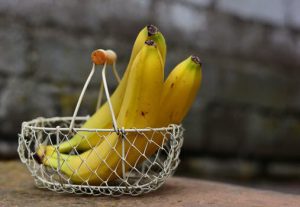 Superfoods for Summer
These foods can be eaten alone, or added to smoothies, salads, sandwiches, or can even be the star of your seasonal barbeque.
They are:
Kiwi : contains 21% of your nutritional value of fiber and is high in vitamins C and E, and potassium.
Asparagus : one cup contains 3 grams of fiber, 3 grams of sugar and only 27 calories.
Watermelon : one cup contains only 46 calories, and offers 18% of your daily vitamin A and 21% of your daily vitamin C.
Strawberries : get a full day's supply of vitamin C with one 49-calorie cup of strawberries.
Blueberries : these small treats provide 4 grams of fiber and almost a quarter of your daily vitamin C in one 84-calorie cup.
Cherries : one 77-calorie cup packs 10% of your daily fiber and 40% of your daily vitamin A.
Summer squash : one cup contains just 18 calories (yes that's 18 calories) and offers 32% of your daily vitamin C. Plus it makes an excellent noodle substitute.
Eggplant : one cup of eggplant contains only 20 calories and 11% of your daily fiber. It also contains vitamin C, vitamin K, niacin, thiamin and vitamin B6.
Eating Healthy: Spotlight on: Bananas
- We consume about 25 pounds of bananas per person each year.
- There are more than 1,000 varieties of bananas.
- Bananas don't grow on trees : trees have bark and banana plants don't have bark.
- Bananas are low in saturated fats, cholesterol and sodium.
- A large portion of the calories in bananas come from sugars.
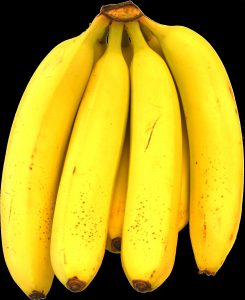 Health benefits of bananas
Recipe: Classic Banana Bread
- 2 cups all-purpose flour
- 3/4 teaspoon baking soda
- 1/2 teaspoon salt
- 1 cup sugar
- 1/4 cup butter, softened
- 2 large eggs
- 1 1/2 cups mashed ripe banana (about 3 bananas)
- 1/3 cup plain low-fat yogurt
- 1 teaspoon vanilla extract
- Cooking spray
Combine the flour, baking soda, and salt, stirring with a whisk. Place sugar and butter in a large bowl, and beat with a mixer at medium speed until well blended. Add the eggs, 1 at a time, beating well after each addition. Add banana, yogurt, and vanilla; beat until blended. Add flour mixture; beat at low speed just until moist. Spoon batter loaf pan coated with cooking spray. Bake at 350° for 1 hour. Cool 10 minutes in pan on a wire rack; remove from pan. Cool completely on wire rack.
Recipe: Banana Chia Pudding
- 1 ½ cups vanilla-flavored flax milk
- 1 large banana cut in chunks
- 7 tablespoons chia seeds
- 3 tablespoons honey
- 1 teaspoon vanilla extract
- 1/8 teaspoon sea salt
Put milk, banana, chia seeds, honey, vanilla extract, and sea salt in respective order in the blender; blend until smooth. Pour mixture into a bowl and refrigerate until thickened, at least 2 hours. Spoon mixture into small bowls to serve.
Summer 101: Great Summertime Fruits
Summer is a great season to partake in the numerous delicious seasonal fruits. Not only do these summertime fruits taste great, but they also give you many nutritional benefits. Some fruits to enjoy before the season ends include:
 Great Summer Fruits
Berries: the phytochemicals in blueberries, strawberries and blackberries all boost immunity, and protect against heart diseases and circulatory problems.
Peaches and plums: full of vitamin C and beta carotene, peaches and plums help to eliminate free radicals from the body.
Pineapples: being packed with the most vitamins and minerals, pineapples are also a great digestive aid.
Papayas and mangoes: both are an excellent source of vitamin C, vitamin A, beta carotene and fiber.
Eating Healthy: Spotlight on Watermelon
- Watermelons are made up of 90% water.
- Watermelons are chock full of a considerable amount of vitamins A and C.
- They contain thiamine, riboflavin, vitamin B6, folate and niacin in small amounts.
- They are a great source of potassium, and also contain magnesium, calcium, phosphorous and iron in trace amounts.
- Watermelons are also very low in calories, free of fats and cholesterol and are rich in carotenoids.
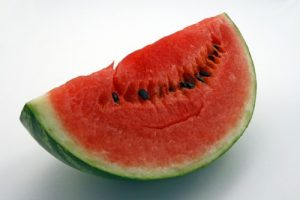 Watermelon Health Benefits
Recipe: Cajun Chicken with Watermelon Mint Salsa
- 2 tablespoons vegetable oil
- 2 tablespoons granulated garlic
- 2 tablespoons mild chili powder
- 2 tablespoons ground cumin
- 2 tablespoons sweet paprika
- 6 boneless, skinless chicken cutlets
Mix together the spices. Coat the chicken cutlets with the spice mixture. Heat a non-stick skillet over medium high heat and place chicken in pan. Blacken on both sides and sauté just until cooked through. Top with Watermelon Mint Salsa and serve immediately.
Watermelon Mint Salsa
- 2 cups chopped seedless watermelon
- 2 tablespoons lime juice
- 1 cup diced seeded tomato
- Minced seeded jalapeno to taste
- 1 tablespoon minced fresh cilantro
- 1 tablespoon minced fresh mint
- ½ cup chopped fresh scallion
Toss ingredients together, cover and refrigerate until ready to serve.
Recipe: Grilled Scallop and Watermelon Kebabs
- 12 sea scallops
- 4 cups boiling vegetable or chicken broth
- 24- 1”x1” watermelon cubes
- ¼ cup soy sauce
- 1 teaspoon sesame oil
- 1 tablespoon minced garlic
- 1 tablespoon fresh minced ginger
Cut the scallops into halves across the diameter to create half-moon shapes. Place them in a heatproof casserole dish in a single layer. Pour the boiling clear broth over the scallops and let them poach for 5 minutes. Drain and cool the scallops. On each skewer alternate one half-moon scallop, then two watermelon cubes, then one half-moon scallop. Mix together the remaining ingredients and brush the kebabs as they are grilled over a medium-hot grill for 90 seconds per side, turning only once. Serve warm.
Enjoy a full years subscription of Healthy Revelations and discover life-changing health secrets you won't find anywhere else.
- $240 Yearly Value
- How To Lose Weight Fast
- Healthy Eating
- Stress Relief
- Disease Prevention
- Doctor Recommendations
- Seasonal Health Tips
- And More...