
Enjoy a full years subscription of Healthy Revelations and discover life-changing health secrets you won't find anywhere else.
- $240 Yearly Value

- How To Lose Weight Fast
- Healthy Eating
- Stress Relief
- Disease Prevention
- Doctor Recommendations
- Seasonal Health Tips
- And More...
FEATURED ARTICLES
- Details
- Written by Lisa Jillanza
- Leafy, green vegetables, like spinach, provide more nutrients than any other food.
- Researchers have found at least 13 different flavonoid compounds in spinach that have been known to act as antioxidants and as anti-cancer agents, combating specific cancers like ovarian and prostate cancer.
- The vitamin K in spinach provides 200% of the daily value in fresh spinach and nearly 1000% of the daily value in boiled spinach.
- Spinach is an excellent source of vitamin C and vitamin A, folate and magnesium.
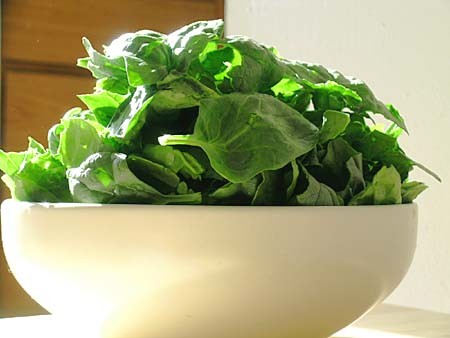
Recipe: Wilted Spinach Salad
- 10 to 12 ounces spinach, washed and torn into pieces
- ¼ cup minced red onion
- 5 to 6 radishes, thinly sliced
- 2 hard-cooked eggs, 1 chopped and 1 sliced
- 2 to 4 slices bacon
- 1 to 1 ½ tablespoons bacon drippings
- 1 ½ tablespoons sugar
- 3 tablespoons vinegar
- 1 tablespoon water
- ½ teaspoon salt
- 1/8 teaspoon pepper
Place prepared spinach in a large bowl. Add onions and radishes. Refrigerate, tightly covered. Fry or microwave bacon until crisp; remove to paper towel and set aside. In a small jar or measuring cup combine drippings with sugar, vinegar, water, salt and pepper. Refrigerate all ingredients until just before serving. When ready to serve, microwave the dressing on high for 30 to 45 seconds, or until mixture boils. Toss the chopped egg with the greens then pour the hot dressing over greens mixture; toss again lightly. Top with sliced egg and crumbled bacon.
Recipe: Spinach Lasagna
- 2 egg whites
- 26 oz of prepared spaghetti sauce
- 24 oz of ricotta cheese
- 10 oz of Lasagna noodles, cooked
- 10 oz of frozen spinach, thawed and chopped, then squeezed dry
- 2 cups of mozzarella cheese, grated, reserve ½ cup
- ¾ cup of Parmesan cheese, grated and divided, reserve 2 tablespoons
- ½ teaspoon of salt
- ½ teaspoon of black pepper
- Olive oil
Preheat oven to 350°. Prepare a 9-in. by 13-in. baking dish for lasagna. Prepare lasagna noodles as directed on the package, then rinse and drain. Combine parmesan cheese, ricotta cheeses with the egg whites, salt and pepper in a large mixing bowl. Pour ¼ cup of spaghetti sauce in the bottom of the baking dish and spread it out using a spatula. Cover the sauce with a single layer of lasagna noodles. Spread about half the cheese mixture over the noodles, and then cover with about half of the spinach and shredded mozzarella cheese. Finish this layer with half of the remaining spaghetti sauce. Add a second layer of noodles, topping with the remaining cheese mixture, spinach, and mozzarella cheese. Top with the final layer of noodles and remaining spaghetti sauce. Sprinkle the reserved Parmesan cheese over the top and bake for 30 minutes. Remove from oven and set for 10-12 minutes.
- Details
- Written by Lisa Jillanza
The summer months and grilling always seem to go hand-in-hand. Because this is a popular cooking method in the summertime, experts remind us that there are ways to grill safely and to avoid cookout germs.

- When handling raw meat, make sure you separate it from other foods. Wash your hands immediately after handling raw meats.
- Throw out marinades/sauces that may have come in contact with raw meats.
- Clean your grill and check all tools before cooking with them.
- Use a food thermometer and check the temperatures that each meat should be cooked until (can be found using a Google search)
- Refrigerate leftovers within 2 hours of cooking.
- Details
- Written by Lisa Jillanza
If you are lactose intolerant or if you know someone who is, here are some things that will help you to learn more about this condition:

- Our bodies produce an enzyme called lactase and when you drink a glass of milk or eat cheese, lactase helps to break down the milk sugar, or lactose, into simpler sugars that are eventually absorbed into your bloodstream. People that are lactose intolerant have a lactase deficiency.
- Many other illnesses have symptoms very comparable to lactose intolerance. It’s best to check with your doctor regarding your symptoms and he/she may suggest that you cut out dairy and denote any changes. A breath test or tests of your stool can determine whether or not you are lactose intolerant.
- Undigested lactose can cause a variety of gastrointestinal symptoms, typically within two hours of having a dairy product… including nausea, bloating, abdominal pain, flatulence and diarrhea. Although some people may have a lactase deficiency and have none of these symptoms at all.
- While a few babies are born with a lactase deficiency, most people become lactose intolerant from age 2 to 12. And even though most people become lactose intolerant during their childhood, they typically do not show signs of the intolerance until late adolescence or early adulthood.
- Almost 65% of people worldwide or nearly 30 million Americans suffer from some degree of lactose intolerance. It is more common among Asians, Africans, Hispanics, or Native Americans and less likely if your ancestors are from northern or western Europe.
- Lactose intolerance is not the same thing as a milk allergy. If you are allergic to milk, then your body is actually fighting dairy as if it were a harmful intruder in your body. Symptoms are far more severe than lactose intolerance and may include: itchy eyes, rash and wheezing. People who are allergic to milk must avoid it entirely.
- People with lactose intolerance can consume some amounts of dairy without any symptoms. Most people can drink up to a half-cup of milk without it affecting them at all.
- Details
- Written by Lisa Jillanza
No one ever wants to admit that their breath may not be the best smelling or that they are an insomniac… but they are both issues that many people have to deal with, among other pesky health problems.
Fortunately, there are some easy “food hacks” that will tackle bad breath and much more!
Food is your “best weapon” when it comes to helping your body deal with some of these not-so-pleasant situations.

Here are some foods that can help:
Have bad breath? Try eating some yogurt. According to experts, eating unsweetened yogurt can reduce the level of odor-causing hydrogen sulfide bacteria in your mouth. Good bacteria found in yogurt, like streptococcus thermophilus and lactobacillus bulgaricus, overpowered the hydrogen sulfide and helped lower levels by more than half – helping to eliminate the smelly mouth odor.
Can’t sleep? Try some kiwi.
Because of the high levels of antioxidants and serotonin in kiwi, many people with sleep disorders have found that eating kiwi one hour before bed will help with their insomnia. People with sleep disorders have increased levels of oxidative stress and low levels of serotonin can cause insomnia. Eating kiwi counteracts this process and can help people catch their ZZZZ’s.
Have a hard workout? Eat some ginger.
If you hit the gym pretty hard and are dealing with the after effects of a tough session, munch on some ginger. Eating just 2 grams of raw or heated ginger per day can reduce post-workout muscle soreness by 25 percent. Ginger contains anti-inflammatory compounds and oils called gingerols that contain painkilling and sedative effects in tests conducted.
Have acne? Indulge in some salmon.
Salmon is rich in omega-3 fatty acids which decreases inflammation. Studies show that inflammation is one of the underlying causes of acne and pimples.
- Details
- Written by Lisa Jillanza
The statistics can be staggering… more than 50 percent of men over the age of 50 are experiencing some form of hair loss, making the hair loss industry worth more than 3.5 billion dollars.
And while many of the creams or treatments that are currently out there for hair loss that don’t work, it is hard to determine what is a fact and what is a myth when it comes to hair loss.

MYTH: Hair restoration never looks natural. There are plenty of great hair restoration techniques out there, compared to years ago when the hair restoration process was more noticeable than present day.
MYTH: Baldness comes from your Mother’s side. Your “hair future” is actually determined from both sides of your family and you are more likely to have a mix of your parent’s hair genes.
MYTH: Pull out a grey hair and three more will grow in its place. Repeatedly pulling out hairs can cause traction alopecia, where the trauma of plucking hairs can actually scar the hair follicle to the degree where it will no longer produce hair. So pulling them out on a regular basis can actually make your hair go away for good.
FACT: Mistreating your hair can cause hair loss. Overworking your hair can damage your hair, make it weak and break easily. Hair troubles can be caused by aggressive brushing, back combing, dying and straightening. Shampoos and even too much UV exposure can also damage hair.
FACT: Propecia works. The majority of hair loss falls into the category of male-pattern baldness. This inherited condition makes a man’s hair follicles stop producing hair in reaction to hormone dihydrotestosterone (DHT). Propecia blocks an enzyme that would otherwise turn testosterone to DHT, although it has to be taken every day and may take up to three months to see any noticeable changes.
Enjoy a full years subscription of Healthy Revelations and discover life-changing health secrets you won't find anywhere else.
- $240 Yearly Value
- How To Lose Weight Fast
- Healthy Eating
- Stress Relief
- Disease Prevention
- Doctor Recommendations
- Seasonal Health Tips
- And More...